How a 30.3 mm Motor Body Saves Space in Compact Chassis
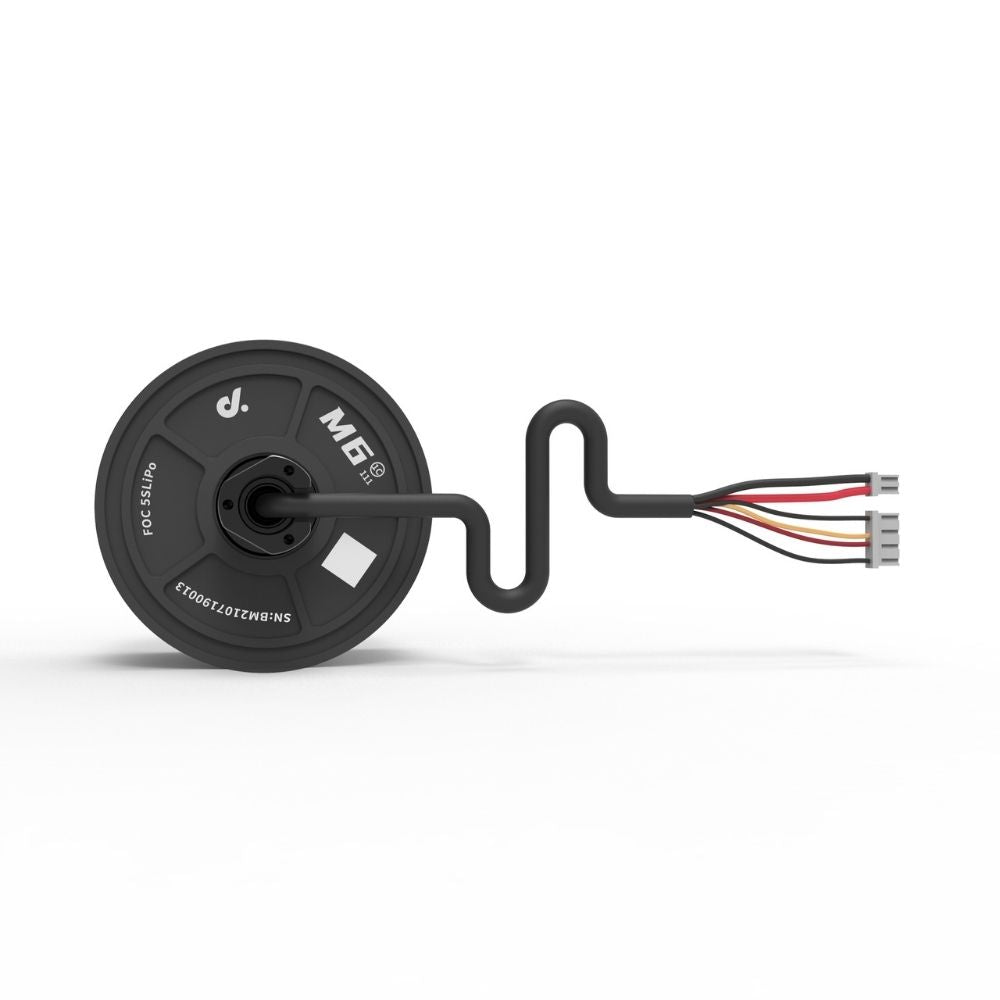
A 30.3 mm motor body reduces installation volume in compact robotic chassis while maintaining practical torque output, thermal stability, and control accuracy. In a 100–200 mm wide mobile robot platform, reducing motor thickness by 5–15 mm can create additional space for batteries, sensors, controllers, and structural components. Compact motors with optimized electromagnetic layouts can achieve torque levels around 0.5–1 Nm while fitting into restricted mechanical spaces.
Compact robotic platforms increasingly require smaller drive systems because internal space is shared by batteries, controllers, communication modules, cameras, and mechanical structures. A motor body size of 30.3 mm helps engineers reduce chassis thickness while keeping wheel positioning and mechanical balance stable. In service robots, inspection vehicles, and automated platforms developed between 2015 and 2025, compact motor packaging became more important as manufacturers added more sensors and computing hardware without increasing the overall footprint.
A smaller motor housing changes the entire mechanical layout of a robot. Traditional motor assemblies often require additional transmission parts, mounting brackets, and spacing allowances. These components can occupy 20–40% of the available wheel module volume depending on the design. A compact motor structure allows more direct integration between the actuator and mechanical frame.
“Reducing motor installation height by only 10 mm can provide additional room for battery cells, control boards, or sensor mounting areas in small robotic platforms.”
The saved space is especially useful in mobile robots with limited chassis dimensions. A robot with a 150 mm wide chassis may need to install two wheel motors, a battery pack, and electronic control units inside a restricted enclosure. Reducing the motor body size from a larger conventional design to approximately 30.3 mm can improve internal component arrangement by allowing shorter mounting distances and thinner chassis structures.
| Component area | Space improvement from compact motor design |
|---|---|
| Battery compartment | Additional room for larger battery modules |
| Controller installation | More flexible PCB placement |
| Sensor integration | Extra space for cameras or distance sensors |
| Mechanical frame | Reduced chassis thickness |
The improvement in packaging does not come only from physical size reduction. Motor performance per volume is also important. Torque density describes how much mechanical output can be produced from a limited installation space. Modern compact motors use improved magnetic circuits, higher copper fill rates, and optimized winding layouts to maintain output levels close to larger motors.
A compact motor with a torque output near 0.8–1 Nm can generate useful wheel force for indoor robots. For example, using a 50 mm wheel radius, a 1 Nm motor produces approximately 20 N of theoretical wheel force before efficiency losses. This level is suitable for many service robots carrying lightweight payloads.
The relationship between motor torque and wheel size affects vehicle design. Smaller wheels require less torque for the same load, while larger wheels provide better obstacle crossing ability but increase torque requirements.
| Wheel radius | Approximate force from 1 Nm torque |
|---|---|
| 40 mm | 25 N |
| 50 mm | 20 N |
| 60 mm | 16.7 N |
Compact motors are often selected together with direct-drive architectures because reducing mechanical transmission parts improves system integration. A flat direct drive motor design eliminates many components found in traditional geared systems, reducing assembly complexity and improving rotational accuracy.
Direct-drive systems have fewer mechanical interfaces compared with motor-plus-gearbox combinations. A gearbox can introduce efficiency losses commonly ranging from 10% to 25%, depending on design quality and operating conditions. Removing additional transmission components can also reduce backlash, which is important for robots requiring stable low-speed movement.
Thermal performance remains an important factor when reducing motor size. Smaller motors have less external surface area for heat dissipation, so internal design optimization becomes necessary. Continuous operation in robots may require motors to run for 6–12 hours per day, making temperature control important for maintaining consistent output.
Compact motor thermal performance is improved through several approaches:
-
Higher efficiency electromagnetic design
-
Reduced copper and iron losses
-
Better heat transfer between internal components and housing
-
Optimized operating current range
Motor temperature directly affects electrical resistance. Copper winding resistance increases as temperature rises, causing higher losses and reduced efficiency. A motor operating at 80°C may have approximately 23% higher copper resistance than at 20°C, which can influence current requirements and torque consistency.
For robotic applications, continuous torque capability is often more important than short-term peak output. A delivery robot or inspection vehicle may accelerate and stop hundreds of times each day. A motor that maintains stable temperature during repeated cycles can provide more reliable performance over long operating periods.
The compact size of a 30.3 mm motor body also improves robot architecture flexibility. Designers can place batteries lower in the chassis, reduce overall robot height, or create additional space for navigation sensors. Lower chassis height can improve stability because the center of gravity moves closer to the ground.
Many indoor robots developed after 2020 adopted thinner mechanical structures because navigation systems became more complex. LiDAR sensors, cameras, wireless communication modules, and onboard processors require additional installation space. Compact motor packaging allows manufacturers to add these functions without significantly increasing chassis dimensions.
“A smaller motor package allows engineers to allocate more volume to sensing, computing, and energy storage systems.”
Encoder integration is another important feature for compact robotic motors. Closed-loop control systems measure motor position and speed feedback, allowing controllers to compensate for changes caused by friction, payload variation, or floor conditions.
Typical robotic encoder resolutions range from 512 to 4096 pulses per revolution. Higher resolution feedback improves low-speed control, especially when robots move slowly in indoor environments. For example, warehouse robots operating below 1 m/s require precise speed regulation to maintain navigation accuracy.
Compact motors are also widely used in automation equipment where installation space is limited. Small positioning systems, laboratory robots, and manufacturing devices often require actuators that combine small dimensions with accurate movement.
A motor body around 30.3 mm can support applications where designers need:
| Application | Typical requirement |
|---|---|
| Indoor mobile robots | Low noise and stable speed control |
| Inspection platforms | Compact size and reliable operation |
| Automation modules | Accurate positioning |
| Robotic joints | High torque density |
Noise performance is another consideration in indoor robotic environments. Gear transmissions can generate additional mechanical noise due to tooth contact and vibration. Direct-drive motor structures reduce these mechanical sources, making them suitable for hospitals, offices, hotels, and research facilities.
Between 2018 and 2025, the growth of autonomous service robots increased demand for smaller actuator modules. Many commercial robots require continuous operation, low maintenance requirements, and compact mechanical structures. A motor that occupies less space allows manufacturers to design thinner products while maintaining required mobility.
Maintenance requirements are also affected by motor architecture. Systems with fewer mechanical transmission components generally require fewer adjustment procedures. Compact direct-drive designs reduce the number of parts that may experience mechanical wear during long-term operation.
The 30.3 mm motor body approach represents a practical solution for engineers working with limited chassis space. By combining compact mechanical dimensions with efficient electromagnetic design, stable thermal performance, and accurate feedback control, these motors support smaller robotic systems without sacrificing essential motion performance.
Modern compact robots are designed around the efficient use of every available millimeter. A reduced motor package can provide additional space for batteries, sensors, electronics, and structural improvements, allowing manufacturers to create more capable robotic platforms within the same physical footprint.